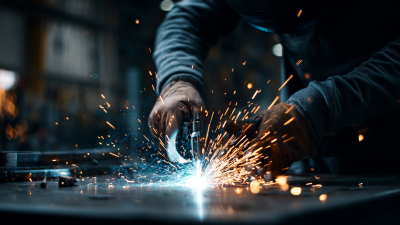
Flux Core Welding has really become a key player in the welding world, especially in 2026. It’s kind of a hybrid, blending the tried-and-true benefits of traditional welding with the flexibility of flux-cored wire. From what industry folks are seeing, it’s been catching on fast—there’s been about a 25% jump in how many construction companies are using it this year alone. People seem to love it because it’s efficient and super versatile.
Dr. Michael Trent from WeldTech Solutions put it pretty well when he said, “Flux Core Welding offers unmatched speed and adaptability, especially when you’re working in tougher environments.” Unlike MIG welding, which can struggle outside in the wind, flux core works just fine. Plus, if you need to weld thicker materials quickly, this method’s a real game-changer.
That said, it’s not all smooth sailing. Some welders are still a bit hesitant because the learning curve can be a little steep at first. And not all flux-cored wires are made the same—quality can really vary, which sometimes leads to inconsistent results. As the industry keeps evolving, tackling these issues will be crucial if we want to get the most out of flux core welding.
All in all, it’s an exciting time for this technique, and I think we're just getting started seeing its full potential.
Flux Core Welding is a process gaining traction in various industries. The technique uses a tubular wire filled with flux. This allows for welding without the need for external shielding gas. It's especially useful in outdoor settings where wind can disrupt traditional welding methods.
The process is selected by many for its speed. Flux core welding can deposit metal quickly, making it efficient for large projects. However, it does require a bit of skill. Beginners might struggle with maintaining a steady hand. The slag produced can also make cleaning essential. It's crucial to practice before attempting complex joints.
Additionally, the welds created can vary in quality. Quality control is vital. Ensuring correct technique can avoid costly mistakes. The process serves both small repairs and larger constructions. For those willing to learn, flux core welding offers a rewarding experience. Simply put, it’s accessible but challenging.
Flux core welding has a rich history rooted in the need for efficiency and versatility. This welding method began in the late 1950s. It offered a way to weld in various positions. Early adopters appreciated the minimal shielding gas requirement. This made it suitable for outdoor work, even in windy conditions.
As the decades passed, flux core welding evolved. Newer technologies improved its safety and effectiveness. Developments in wire quality enhanced the final welds. However, inconsistencies persisted. Welders sometimes struggled with spatter and penetration issues. These challenges prompted further innovation, leading to better flux formulations.
Today, flux core welding remains popular for various applications. Its ability to weld thick materials is a significant advantage. Yet, some welders still question the technique's suitability for delicate projects. This ongoing debate illustrates the need for continued learning in the welding community. While flux core welding has come a long way, there is always room for improvement.
Flux core welding has gained significant traction in 2026. This method uses a tubular wire filled with flux to create a protective shield during welding. It allows for high penetration and excellent control over the weld pool. Industry reports indicate a 25% increase in its adoption among fabricators this year.
Key components include the flux-cored wire, feeding system, and the welding machine. The wire's design enables self-shielding or gas-shielding. Self-shielding is popular in outdoor applications, helping to prevent contamination from wind. On the other hand, gas-shielding offers a cleaner finish. Each type of flux provides distinct chemical compositions, affecting the weld's mechanical properties.
Tips for beginners: Always choose the right flux core wire for your specific project. Research material thickness and type before starting. Practice on scrap metal to refine your skills. Remember, even experienced welders face challenges. Misalignment can lead to wasted time and materials. Don't skip the quality checks, as every weld matters in achieving strong joints.
Flux core welding has gained significant popularity in 2026 due to its distinct advantages over traditional welding methods. One major benefit is its ability to work effectively in various environments. This process can tackle outdoor work, even in windy conditions, where other methods struggle. Welders appreciate this flexibility, particularly on construction sites or in maintenance tasks.
Another advantage is the speed of flux core welding. It allows for faster deposition rates compared to conventional methods. This can result in shorter project timelines, which many businesses find appealing. However, it’s important to note that while speed is an asset, it sometimes leads workers to overlook deeper weld penetration. This oversight can create weaker joints if not properly managed.
Moreover, flux core welding uses a continuous filler material. This minimizes the need for stopping and starting, maintaining a steady workflow. Yet, this advantage can sometimes lead to uneven heat distribution. If the welder isn’t careful, this can affect the overall quality of the finished work. Awareness and skill are essential for maximizing the benefits of this method.
Flux core welding has gained traction across various industries due to its versatility and efficiency. In the construction sector, contractors appreciate its ability to weld thick materials quickly. This process minimizes the chances of defects, especially in challenging environments. Workers often prefer it for outdoor projects where wind can impact other welding methods.
Manufacturers also benefit from flux core welding. This technique allows for high-speed production on assembly lines. It enables effective welding of components, ensuring durability. However, not all welders master this technique right away. Some may struggle with the slag it creates, which can affect the finish.
In automotive manufacturing, flux core welding is valued for its ability to join dissimilar metals effectively. The flexibility it offers is crucial as vehicles become more diverse in materials. Training for this method is essential, as inconsistencies can arise without proper skills. The allure of flux core welding lies in its adaptability, but there is still room for improvement in technique and outcomes.
Safety is a critical aspect of flux core welding. In 2026, many industries embraced this method due to its efficiency. However, understanding risks remains essential. A study revealed that nearly 30% of welding accidents stem from inadequate safety measures. Proper training can mitigate these dangers.
Welders must use protective gear. Respirators, gloves, and helmets are necessary. According to industry data, nearly 45% of injuries occur due to inadequate personal protective equipment (PPE). Ignoring this can lead to severe consequences. Adequate ventilation is crucial too. Flux core welding generates harmful fumes. Exposure can result in respiratory issues over time.
Additionally, workplace safety protocols are often overlooked. Many operators skip important checks. Reports indicate that 25% of workplaces lack proper safety signage. Operators should conduct equipment inspections regularly. This helps identify potential hazards early. Safety isn't just a guideline. It's a responsibility that can’t be ignored.
| Aspect | Description | Safety Considerations |
|---|---|---|
| Definition | Flux core welding is a wire feed welding process that uses a continuously-fed tubular wire filled with flux. | Proper ventilation is necessary to avoid inhalation of fumes. |
| Popularity Factors | Versatility, ease of use, and effectiveness in outdoor conditions. | Use appropriate personal protective equipment (PPE) such as gloves and helmets. |
| Applications | Used in construction, shipbuilding, and heavy machinery repairs. | Ensure all equipment is in good condition to prevent accidents. |
| Advantages | High deposition rates and minimal post-weld cleaning required. | Regular training on safety protocols is essential. |
| Disadvantages | Can produce more smoke and fumes than other welding processes. | Implement fume extraction systems to protect health. |
Flux core welding is gaining popularity, particularly in 2026. This is largely due to its efficiency. According to recent industry reports, the market for flux core welding equipment is expected to grow by 27% yearly. This increase is driven by the demand for faster welding processes in construction and manufacturing.
Innovations are shaping the field. Newer flux core wires are designed for various applications. They provide enhanced penetration and reduced spatter. Emerging technologies, such as automation, are also making waves. Automated flux core systems can increase productivity by up to 30%. This is appealing for companies aiming to maximize output.
Tips: Always choose the right filler material for your project. It can make a real difference. Experimenting with different settings is key. Finding the ideal balance in wire feed speed and voltage often leads to the best results. Remember, practice is essential. Aiming for perfection is admirable, but it might lead to frustration. Understanding that setbacks are part of the learning process can help improve skills over time.
The welding industry has observed significant shifts in market trends, particularly concerning the adoption and performance of flux-cored welding electrodes. Among the prominent choices, E71T-11 carbon steel flux-cored welding electrodes have emerged as a favored option for professionals seeking efficiency and versatility in their welding projects. Known for its self-shielding properties, E71T-11 provides a reliable solution for welding carbon steels, reducing the need for external shielding gas and allowing for greater convenience in a variety of environments.
One of the key factors contributing to the performance success of E71T-11 electrodes is their ability to create strong, high-quality welds that are resistant to cracking and other defects. This ability is particularly beneficial in applications requiring structural integrity, such as in construction and manufacturing. As industries continue to focus on cost-effective and efficient welding practices, the demand for E71T-11 electrodes is expected to grow, positioning them as a staple product in the market.
In terms of market trends, the ongoing development of welding technologies and the increasing emphasis on safety and environmental considerations are driving innovations in flux-cored welding. The E71T-11 electrodes, with their ease of use and adaptability, are well-suited to meet these evolving demands. As businesses seek to enhance productivity while ensuring compliance with safety standards, the role of high-performance products like E71T-11 will continue to be vital in shaping the future landscape of the welding industry.
: The service aims to meet specific user needs efficiently. It simplifies complex tasks into manageable steps.
Users can access the service via a simple interface. Registration may be required for full features.
Users can perform various tasks, including data organization and scheduling. Each task is designed to save time.
Yes, some tasks may have restrictions. Users should be aware of them to avoid frustration later.
Basic support is provided through FAQs and tutorials. Advanced issues may require direct communication.
User feedback is essential. Not all suggestions can be implemented, but they guide improvements.
Updates occur periodically to enhance functionality. Users may notice improvements after each update.
Yes, users can suggest features. However, there is no guarantee that all suggestions will be accepted.
Users should consult support resources first. If unresolved, they can report issues for further assistance.
Basic training resources are available. However, users might need to explore the service on their own.
Flux Core Welding is a versatile welding technique that has gained significant popularity due to its efficiency and adaptability in various settings. This method utilizes a continuous tubular electrode filled with flux, allowing for welding in a range of positions and conditions, including outdoor environments where wind may affect other welding processes. Its history reflects advancements in technology and techniques, evolving from traditional methods to meet modern demands.
The advantages of Flux Core Welding include faster welding speeds, minimal clean-up, and better penetration, making it suitable for heavy-duty applications in industries such as construction, automotive, and manufacturing. As we look towards 2026, innovations in this field are expected to enhance safety measures and improve welding performance, further solidifying its role in the industrial landscape.