
Choosing the wrong shielding gas can leave you with welds full of porosity, spatter, or weak strength—even when you’re using the perfect solid MIG wire and equipment. MIG welding gas may seem inconspicuous, but it’s the “invisible key formula” that directly affects arc characteristics, metal transfer methods, and the final mechanical properties of the weld. Below, we’ll break down a simple decision framework to help you pick the right shielding gas for your application.
The Decision Framework: Find Your Perfect Shielding Gas
We’ll walk through three core questions to narrow down your options. No more guesswork—just targeted choices based on your actual needs.
Question 1: What Material Are You Welding?
Material is the first and most critical factor. Let’s start with the most common and move to specialty metals.
Mild Steel (The Most Common Scenario)
For gas for welding mild steel with solid MIG wire, two options dominate the market. Here’s how they stack up:
C25 Gas (75% Ar, 25% CO2) – The Universal First Choice
Why it works: This argon CO2 mix delivers a stable arc, minimal welding spatter, and smooth weld appearance—solving the biggest frustrations of mild steel welding. It reduces alloy element loss, boosts weld tensile strength, and works for most applications, from thin sheets to medium-thick plates. Whether you’re doing short-circuit or spray transfer, C25 keeps the process clean and controllable.C25
Best for: Most mild steel jobs where quality, appearance, and ease of operation matter.
Pure CO2 – The Cost-Saving Trade-Off
Why it’s used: Pure CO2 is significantly cheaper than mixed gases, making it attractive for high-volume jobs on a tight budget. It also provides deeper penetration, which is useful for thick plate welding without beveling. The trade-off: Expect a “harder” arc, more welding spatter, and a rougher weld surface. You’ll spend extra time on post-weld cleaning, and alloy loss is higher compared to C25.
Best for: Thick mild steel where appearance isn’t critical and cost is the top priority.
Pro tip: If you weld mostly mild steel and want a clean, hassle-free process, start with C25. It’s the most versatile option for solid MIG wire applications.
Stainless Steel
Stainless steel welding gas needs to preserve corrosion resistance and ensure good weld appearance. Pure argon won’t work here—it leads to poor weld wetting and messy成形. Opt for a tri-mix gas like Ar + 2-5% CO2 + 1-2% O2 or Ar + 90% He + 2.5% CO2. These blends lower molten metal surface tension, improve weld spread, and minimize alloy loss, keeping the stainless steel’s protective properties intact.
Aluminum
Aluminum requires pure argon or an argon-helium mix. Argon’s primary job is to clean the aluminum oxide film (a must for strong welds) and stabilize the arc. Adding helium boosts heat input, which helps with thicker aluminum sections by increasing penetration and welding speed. Avoid any CO2 or O2 in aluminum shielding gas—they’ll cause porosity and brittle welds.
Question 2: What Weld Properties Do You Prioritize?
Your gas choice directly impacts how your weld looks and performs. Match the gas to your priority properties:
- Need wider weld beads and shallower penetration (great for thin sheets)? Go with a higher argon ratio – it softens the arc and prevents burn-through.
- Need deep penetration for thick plates? Pure CO2 or a higher CO2 mix delivers more concentrated heat.
- Want faster welding speed? Argon-helium mixes or C25 allow higher amperage without excessive spatter, boosting productivity.
- Hate post-weld cleaning? C25 or other argon-rich mixes cut down welding spatter drastically, saving you time on grinding and finishing.
Question 3: What’s Your Budget?
Let’s be practical—budget drives many decisions. Here’s the real cost breakdown, beyond just the gas price:
- Pure CO2: Lowest upfront gas cost, but higher long-term costs from extra cleaning time and increased solid MIG wire waste.
- C25 Gas: Higher gas cost than pure CO2, but lower overall costs thanks to faster welding speeds and less rework. No extra equipment is needed—just a single mix cylinder.
- Tri-mix or argon-helium mixes: Higher cost for specialty materials, but necessary to avoid costly weld failures .
Here’s the deal: If you’re on a tight budget but weld high volumes of mild steel, pure CO2 is feasible—just factor in cleaning time. For most shops, C25 offers the best balance of cost and performance.
Critical Tips: Don’t Ruin a Good Gas Choice with Poor Setup
Even the right shielding gas won’t save your weld if you mess up gas flow rate or gas dryness. These details are non-negotiable:
Gas Flow Rate (CFH/LPM)
Too little flow leaves your weld unprotected (causing weld porosity); too much creates turbulence (sucking in air, also causing porosity). For most solid MIG wire applications:
- Mild steel (C25 or pure CO2): 15-25 LPM (30-50 CFH)
- Stainless steel (tri-mix): 18-28 LPM (38-60 CFH)
- Aluminum (argon/argon-helium): 20-30 LPM (42-63 CFH)
Gas Dryness
Moisture in shielding gas is a silent killer. It causes weld porosity and weakens welds. Always use a dryer/filter in your gas line, and check that your cylinders are above 0.5 MPa (70 psi)—below this pressure, moisture and impurities concentrate in the gas.
Final Principle & Next Step
The core rule: Match your shielding gas to your material, balance quality and cost, and always ensure clean, adequate gas delivery. Get this right, and your solid MIG wire will perform at its best.
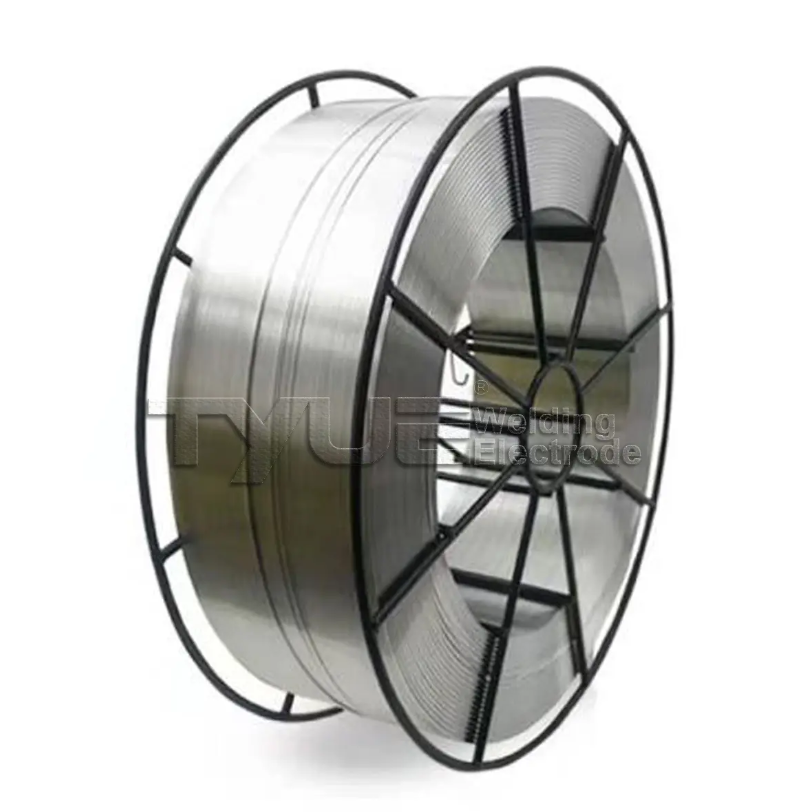
Once you’ve chosen the right shielding gas, selecting a high-quality solid MIG wire that matches both the gas and your material is the next step to welding success. A good solid MIG wire ensures stable chemical composition and smooth wire feeding—working in sync with your carefully chosen shielding gas to deliver consistent, strong welds every time.
Post time: Jan-03-2026