
All-position welding poses unique challenges—from inconsistent bead formation to hidden defects that threaten structural integrity. For fabricators, contractors, and procurement teams, the goal is clear: reliable, precise results that meet industry standards and avoid costly rework. The American Welding Society guidelines aren’t just a compliance checkbox; they’re the backbone of innovative, precise all-position welding practices. And when paired with trusted consumables like AWS E7018, these standards turn complexity into consistency.
AWS Guidelines: The Foundation of Precision in All-Position Welding
AWS guidelines, most notably AWS D1.1 for structural steel welding, set the bar for quality and precision across every welding position—flat, horizontal, vertical, and overhead. These standards aren’t static; they evolve with industry innovations to address real-world pain points, such as skill shortages and quality variability. For buyers, adherence to AWS guidelines is non-negotiable: it ensures welds meet safety requirements, reduce liability risks, and maintain uniformity across projects.
A key focus of AWS guidelines is minimizing human error, a critical issue in all-position welding where operator skill alone can’t guarantee consistency. AWS D1.1 specifies strict tolerances for weld defects—for example, limiting undercut to ≤1mm for plate thickness under 25mm and banning microscopic cracks entirely . It also mandates welding procedure qualification to standardize parameters like current, voltage, and travel speed, ensuring every weld—regardless of position—follows a proven formula for success. This standardization is a game-changer for buyers, as it eliminates the guesswork in supplier evaluation and ensures consistent performance across batches.
AWS E7018: More Than a Electrode—An Industry Workhorse Aligned with AWS Standards
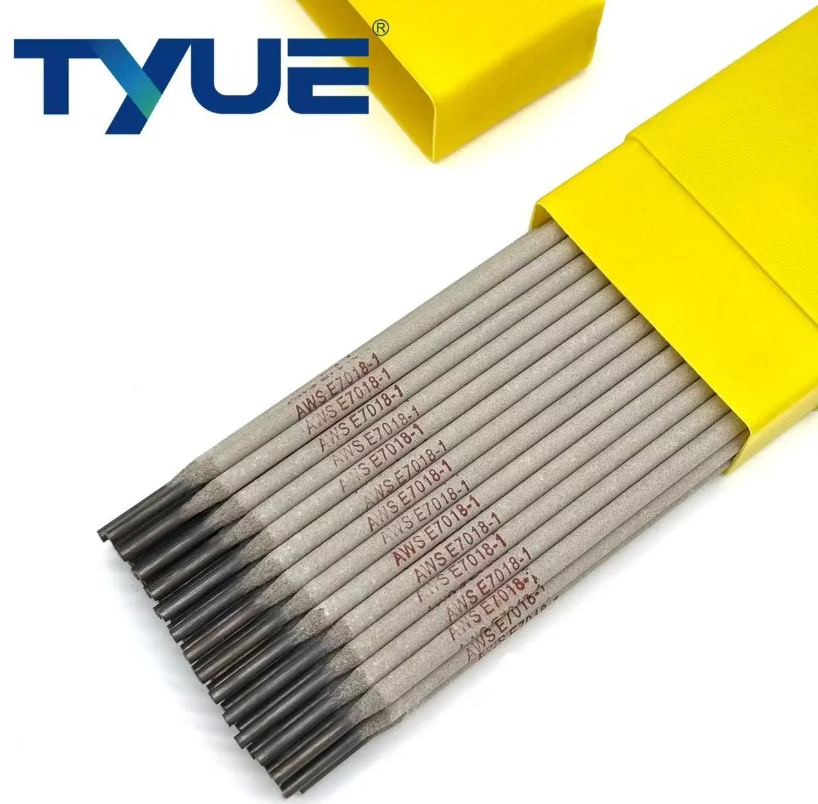
While AWS guidelines provide the framework, the right consumables bring precision to life—and AWS E7018 stands out as a staple in all-position welding for regulated industries. Classified as a low-hydrogen, mild steel electrode, AWS E7018 isn’t just a product; it’s a solution tailored to the rigor of AWS requirements, making it ideal for structural, oil and gas, and construction applications where durability matters most.
The low-hydrogen of AWS E7018 directly addresses a top buyer concern: weld cracking. AWS guidelines prioritize crack prevention in all positions, and E7018’s formulation aligns perfectly with this goal, especially when welding thick materials or in high-humidity environments. Its versatility across positions—from overhead to vertical down—also supports AWS’s push for process efficiency, reducing the need for multiple electrode types and simplifying inventory management for buyers.
Another industry-specific advantage of AWS E7018 is its compatibility with AWS’s quality control protocols. Buyers rely on AWS-certified welds to pass inspections , and E7018’s consistent arc characteristics and bead profile make it easier to achieve AWS-compliant results. This compatibility reduces rework rates—a major cost driver for buyers—and ensures projects stay on schedule.
Bridging Innovation and Compliance: AWS-Driven All-Position Welding Practices
Modern all-position welding innovations, from automated orbital systems to adaptive sensor technology, are designed to work within AWS guidelines, not outside them. For example, automated all-position welding systems use AWS-specified parameters to adjust travel speed and arc length in real time , ensuring precision even in hard-to-reach positions. When paired with AWS E7018, these systems leverage the electrode’s stable arc to deliver consistent, AWS-compliant welds at scale—addressing the industry’s skill shortage while maintaining quality.
For buyers navigating regulated industries , AWS guidelines and AWS E7018 create a trusted ecosystem. Compliance with AWS standards isn’t just about meeting legal requirements; it’s a competitive advantage. Buyers can confidently source welds knowing they’ll withstand rigorous testing, reduce long-term maintenance costs, and protect their brand reputation.
Key Takeaways for Buyers and Fabricators
AWS guidelines are the cornerstone of precise all-position welding, providing standardized processes that minimize defects and ensure consistency. AWS E7018 complements these guidelines by offering a low-hydrogen, position-versatile electrode that aligns with AWS’s quality and safety priorities. For buyers, prioritizing AWS-compliant practices and consumables like E7018 translates to lower risk, reduced rework, and reliable project outcomes.
As all-position welding continues to innovate—with automation and smart technology leading the way—AWS guidelines will remain the North Star. By integrating these standards with proven consumables, fabricators can deliver the precision buyers demand, while buyers can make informed decisions that balance quality, compliance, and cost.
Post time: Jan-16-2026