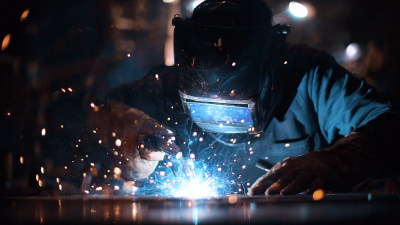
In today’s constantly changing world of manufacturing, Engineering Welding has really become a key player—it helps boost efficiency, improve quality, and drive innovation. I came across a recent report from Global Market Insights that predicts the engineering welding market could hit a massive $30 billion by 2025. That’s mainly because there’s a growing demand for high-performance materials and more advanced fabrication techniques. All this just highlights how important welding is in the manufacturing industry, especially as companies push for sustainability and try to cut costs.
Experts keep emphasizing just how transformative Engineering Welding really is. Take Dr. Mark Thompson, a well-known welding engineer at WeldTech Industries—he even says, 'Engineering Welding isn’t just about joining things together; it’s really the backbone of modern manufacturing, making sure structures are solid and durable.' His words really drive home the point that bringing in advanced welding tech isn’t just a trend—it’s paving the way for more automation and precision in production lines.
As we look at the top 10 benefits of Engineering Welding, it’s clear that this field does more than just improve product quality. It also helps cut operational costs and boost safety. With new materials and innovative welding methods coming into play, it’s pretty exciting to think about how much Engineering Welding could change the manufacturing game in the near future.
Advantages of Precision Welding Techniques in Manufacturing Efficiency
Precision welding techniques play a crucial role in enhancing manufacturing efficiency in today's industrial landscape. By employing advanced methods such as laser welding and TIG (Tungsten Inert Gas) welding, manufacturers can achieve tighter tolerances, reduce material wastage, and improve the overall quality of their products. This fine-tuned approach not only streamlines production processes but also minimizes the need for secondary operations, leading to significant cost savings and shorter lead times.
At Wenzhou Tianyu Electronic Co., Ltd., our commitment to excellence in welding consumables, including stainless steel and carbon steel electrodes, supports the implementation of these precision welding techniques. With over 22 years of experience in the industry, we understand the importance of providing high-quality welding materials that enhance reliability and performance in manufacturing processes. By choosing our welding products, manufacturers can optimize their operations, achieve superior weld integrity, and ultimately drive greater efficiency in their production environments.
Streamlining Production: The Role of Welding in Modern Automation
In modern manufacturing processes, welding plays a pivotal role in streamlining production, particularly with the rise of automation. As industries increasingly adopt automated systems, the integration of advanced welding techniques becomes crucial. Automated welding not only enhances precision by minimizing human error but also significantly accelerates production rates. This efficiency allows manufacturers to meet high demand without compromising on quality, making it a cornerstone of contemporary production lines.

Moreover, automation in welding introduces consistency across batches, ensuring identical quality in every product. Robotics and computer-controlled welding machines can operate continuously, leading to better resource utilization and reduced operational costs. With the ability to quickly adapt to different welding tasks and materials, these automated systems facilitate flexibility in manufacturing processes, enabling companies to innovate and respond swiftly to market needs. In this evolving landscape, the adoption of engineering welding is not merely advantageous—it's essential for maintaining competitive edge and optimizing performance in modern manufacturing.
Enhancing Material Strength through Advanced Welding Methods
In modern manufacturing, the advancement of welding techniques significantly enhances material strength, a crucial factor for industries ranging from automotive to aerospace. According to the American Welding Society, advanced welding methods, such as laser and friction stir welding, can increase the tensile strength of welded joints by up to 30% compared to traditional methods. This not only improves the durability of components but also reduces the overall weight, which is vital for industries focusing on efficiency and sustainability.
Furthermore, the integration of automation and robotics in welding processes allows for greater precision and consistency. A report from the Welding Research Council highlights that using robotic welding can reduce defects by up to 50%, ensuring higher quality and strength in manufactured products. The precision offered by these technologies enables the use of high-strength materials like titanium and advanced alloys, which were previously deemed challenging to weld effectively. By adopting these advanced welding methodologies, manufacturers can not only elevate the performance of their products but also achieve competitive advantage in a rapidly evolving market.

Cost-Effectiveness of Welding in Reducing Manufacturing Waste
In the landscape of modern manufacturing, the cost-effectiveness of engineering welding has become a critical factor in reducing manufacturing waste. According to a report by the American Welding Society, implementing advanced welding techniques can lead to a 30% reduction in material wastage during production. This is largely due to welding's ability to join materials with precision, minimizing excess usage and ensuring that components fit together seamlessly without the need for extensive machining or finishing processes.
Moreover, the role of welding in streamlining operations cannot be overstated. The National Institute of Standards and Technology (NIST) found that manufacturers who integrate welding into their processes can enhance productivity by up to 25%. This efficiency translates into lower operational costs, as fewer resources are expended on labor and materials. The combination of reduced material waste and improved productivity not only bolsters the bottom line but also supports sustainability initiatives, making welding an indispensable technique in the evolution of modern manufacturing practices.
The Impact of Welding on Sustainability in Manufacturing Practices
Welding plays a crucial role in enhancing sustainability within modern manufacturing processes, especially as industries shift towards greener practices. Innovations in engineering welding have made significant strides in improving energy efficiency and reducing waste. For instance, advancements in steel processing and welding technologies are not only streamlining production but also minimizing environmental impact. By adopting eco-friendly materials and methods, manufacturers can significantly lower their carbon footprints, contributing to a more sustainable manufacturing landscape.
As industries like electric vehicle production and industrial fabrication embrace these advancements, the integration of welding with AI-driven automation further amplifies efficiency and sustainability. This transformative approach enables precise control over welding processes, leading to less energy consumption and reduced emissions. Moreover, innovative practices, such as megacasting, demonstrate how modern welding techniques can replace numerous welded components with single structures, thereby decreasing resource usage and enhancing the recyclability of materials. These developments collectively highlight welding's pivotal role in fostering sustainable manufacturing practices across various sectors.
Top 10 Benefits of Engineering Welding in Modern Manufacturing Processes - The Impact of Welding on Sustainability in Manufacturing Practices
| Benefit |
Description |
Impact on Sustainability |
| Increased Efficiency |
Welding processes reduce labor time and improve production rates. |
Lower energy consumption and reduced waste generation. |
| Cost Reduction |
Welding minimizes the need for additional fastening materials. |
Decreases raw material usage and promotes recycling. |
| Enhanced Strength |
Welded joints are often stronger than base materials. |
Increased durability leads to longer product life cycles. |
| Versatility |
Applicable to various materials and settings in production. |
Allows for the use of recycled materials in manufacturing. |
| Minimized Waste |
Welding reduces component wear and reduces remanufacturing needs. |
Encourages a circular economy by maximizing material usage. |
| Improved Safety |
Robust welds reduce the risk of component failure. |
Safer products lead to less frequent repairs and replacements. |
| Lower Carbon Footprint |
Reduced energy consumption during manufacturing. |
Contributes to overall sustainability goals in production. |
| Simplified Design |
Welding can replace complex assembly tasks. |
Reduces the number of parts and supports waste reduction. |
| Continuous Improvement |
Advancements in welding technology promote efficiency. |
Supports innovation towards more sustainable practices. |
| Global Accessibility |
Welding techniques can be implemented worldwide. |
Promotes local manufacturing and reduces transportation emissions. |
Improving Product Lifecycle and Durability with Engineering Welding Solutions
Engineering welding plays a crucial role in enhancing product lifecycle and durability in modern manufacturing processes. By employing advanced welding techniques, manufacturers can create stronger and more resilient products, leading to reduced maintenance costs and extended use. According to a report by the American Welding Society, effective welding can increase the fatigue strength of components by as much as 25%, significantly enhancing durability under operational stresses. This increased resilience is critical in industries such as automotive and aerospace, where reliability and safety are paramount.
Moreover, engineering welding contributes to the overall efficiency of manufacturing operations. A study from the International Institute of Welding indicated that innovative welding solutions can reduce production time by up to 30%, yielding significant cost savings and improved output quality. By minimizing weld defects and maximizing joint strength, companies can better protect their investments in materials and labor, resulting in a more sustainable manufacturing process. As industries continue to evolve, the integration of advanced welding techniques will be essential in meeting the growing demand for durable and high-performance products.
Top 10 Benefits of Engineering Welding in Modern Manufacturing Processes
This chart illustrates the various benefits of engineering welding in modern manufacturing processes. The data represents a score for each benefit based on their impact on product lifecycle and durability.
Comprehensive Guide to ER5356 Aluminum Welding Wire: Features, Benefits, and Applications
ER5356 aluminum welding wire is renowned for its robust properties, making it an ideal choice for a range of applications. This general-purpose aluminum alloy is specifically designed to offer relatively high shear strength, which is critical in industries where structural integrity is paramount. Its composition allows for excellent weldability, providing strong and durable joints that are essential in various manufacturing processes. This makes ER5356 a favorite among welders who require reliable performance and consistency in their work.
In addition to its impressive mechanical properties, ER5356 welding wire also boasts good corrosion resistance, which is particularly beneficial in marine environments. This resistance to corrosion extends the lifespan of welded components, reducing maintenance costs and increasing reliability. Moreover, the versatility of this welding wire makes it suitable for multiple applications, including automotive, aerospace, and shipbuilding industries. Its ability to perform well in both the 5xxx series aluminum alloys, which include high magnesium content, and in applications requiring a combination of strength and light weight, positions ER5356 as a staple in modern welding practices.
FAQS
: Welding is crucial in modern automation as it streamlines production by enhancing precision, accelerating production rates, and maintaining high quality.
Automated welding minimizes human error and allows for continuous operation, which speeds up production and improves resource utilization.
Automated welding ensures identical quality across batches, leading to consistent product outcomes.
Advanced welding techniques can lead to a 30% reduction in material wastage by allowing precise joining of materials, minimizing excess usage.
Integrating welding can enhance productivity by up to 25%, which lowers operational costs.
Welding allows for quick adaptation to different tasks and materials, facilitating innovation and responsiveness to market needs.
By reducing material waste and improving productivity, welding helps companies achieve their sustainability goals while bolstering their bottom line.
Fewer resources are expended on labor and materials due to the efficiency gained from welding, leading to lower operational costs.
Automated systems can quickly adapt to varying welding tasks and materials, providing flexibility within the production process.
Engineering welding enhances efficiency, reduces manufacturing waste, ensures consistency, and supports innovation.
Conclusion
Engineering Welding plays a crucial role in modern manufacturing processes, offering numerous advantages that enhance efficiency and productivity. Precision welding techniques significantly improve manufacturing efficiency by ensuring high-quality seams and reduced errors, which streamlines production, especially in automated environments. Advanced welding methods also enhance the material strength of products, leading to longer-lasting and more durable end items essential in today’s competitive market.
Moreover, from a cost perspective, Engineering Welding contributes to manufacturing cost-effectiveness by minimizing waste through precise application. It also supports sustainability efforts within manufacturing practices, aligning with the growing demand for environmentally conscious production methods. With Wenzhou Tianyu Electronic Co., Ltd.'s expertise in producing high-quality welding electrodes and consumables, the integration of Engineering Welding solutions not only meets industry demands but also fosters innovation in product lifecycle and durability.