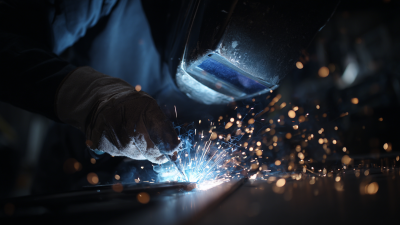
Steel welding? It’s actually a pretty vital skill across a bunch of different industries. The fact that the steel welding world is growing—like, it’s projected to expand by about 5% every year according to the American Welding Society—really shows just how important it’s become. As more projects pop up that need skilled welders, getting the hang of steel welding techniques becomes super important, especially if you’re just starting out.
John Smith, who’s pretty well-known at WeldTech Inc., puts it simply: “Welding isn’t just about connecting metal; it’s all about precision and having the right skills.” That really hits home because if you’re good at steel welding, the quality of your work tends to be way better. But let’s be real—beginners often find themselves struggling with the basics, trying to keep their technique consistent. Starting to weld steel can be tricky, and yes, mistakes happen. Those mistakes can sometimes mean redoing a job, which is frustrating.
But here’s the thing—practice makes perfect, and with the right guidance, those early setbacks can be sorted out. Building a solid foundation in steel welding isn’t just a nice-to-have; it’s a must. When beginners invest in good training and take their time to learn, they quickly start feeling more confident and get better at their skills. Honestly, embracing the whole learning curve is part of what makes it possible to succeed in this competitive field.
Understanding the basics of steel welding techniques is crucial for beginners. Welding is both an art and a science. It requires practice and patience. Beginners often face challenges. Understanding different methods can help you improve.
When starting with steel welding, having the right tools is crucial. A basic welding machine is essential for beginners. It can be either a MIG or TIG welder, depending on the projects. Safety equipment should not be overlooked. A good welding helmet protects your face and eyes from sparks. Gloves are vital to prevent burns.
In addition to the welder and safety gear, tools like clamps, angle grinders, and wire brushes are important. Clamps hold your materials steady. An angle grinder helps smooth edges and clean surfaces. Wire brushes are great for removing rust or old paint. Every piece of equipment plays a role in achieving a better weld.
Welding rods and filler materials are also necessary. These items can affect the quality of your work. Don't forget to test different types to see which ones work best. Learning to use all these tools takes time. Expect some mistakes along the way. Reflecting on these experiences is key to improvement in welding skills.
Welding involves risks that require careful attention. Safety gear is essential. Always wear a helmet with a proper filter. Protective gloves and flame-resistant clothing are crucial. According to the American Welding Society, nearly 50% of welding injuries relate to inadequate personal protective equipment (PPE).
Tips: Invest in high-quality PPE. It's your first line of defense.
Ventilation is key when welding. Fumes can be hazardous. A well-ventilated workspace can minimize inhalation risks. OSHA reports that effective ventilation reduces exposure to metal fumes by up to 90%. Watch for signs of fatigue and stress.
Tips: Regular breaks can help maintain focus.
Knowing emergency procedures is vital. Have a fire extinguisher nearby. Understand how to handle burns or eye injuries. Many beginners underestimate these risks. Training in safety practices can significantly lower accident rates. Always prioritize a safety-first mindset while you learn the art of welding.
Welding steel is essential in various industries. Understanding different methods helps beginners choose the right approach.
MIG (Metal Inert Gas) welding is popular for its ease of use. Beginners often find it straightforward with practice. It uses a movable wire electrode fed automatically. This method is ideal for thin materials and indoor projects. It's known for speed and efficiency. A report by the American Welding Society indicates that MIG welding accounts for approximately 50% of all welding processes used in construction.
TIG (Tungsten Inert Gas) welding offers high precision. It requires more skill, making it challenging for newcomers. This method is used for stainless steel and aluminum. It produces clean, strong welds, but the technique can be tricky. Beginners may struggle with controlling the heat. Mistakes often lead to weak joints.
Tip: Practice with scrap metal before tackling real projects. This allows you to refine your technique without the fear of failure.
Stick welding is another method worth noting. It’s versatile and can be used outdoors. However, it can create more smoke and a less clean finish. Understanding these welding techniques will enhance your skills over time. Remember, mastery comes with experience and reflection on your past work.
| Welding Method | Description | Common Applications | Skill Level |
|---|---|---|---|
| MIG Welding | A process that uses a wire fed through a welding gun to create a weld. | Automotive, fabrication, and thin-sheet metal. | Beginner-Friendly |
| TIG Welding | Uses a non-consumable tungsten electrode to produce the weld. | Aerospace, automotive, and stainless steel structures. | Intermediate |
| Stick Welding | Uses a coated electrode to create a weld, good for outdoor work. | Heavy equipment repair and maintenance. | Beginner to Intermediate |
| Flux-Cored Arc Welding | Similar to MIG but uses a tubular wire filled with flux. | Construction and shipbuilding. | Intermediate |
| Submerged Arc Welding | Uses a continuously fed electrode and a blanket of granular fusible flux. | Fabrication of large structures, such as tanks and bridges. | Advanced |
Preparing steel for welding is a critical step. Proper preparation ensures a strong and lasting bond. Start by cleaning the steel surface. Remove rust, dirt, and grease. Use a wire brush or grinder to achieve a smooth finish. Pay attention to corners and edges. Any contaminants can weaken the weld.
Next, measure and cut the steel to the desired dimensions. Precision is key here. Use a saw or cutting torch for accuracy. Check your measurements multiple times. Even a small error can affect the overall result. After cutting, bevel the edges if necessary. This enhances penetration during welding.
Lastly, clamp the pieces securely in place. This keeps everything steady during the welding process. You may notice some misalignment at first. Adjust as needed before you start welding. Evaluate your setup. Reflections on these steps can lead to improvement in future projects.
Welding steel can be challenging for beginners. However, mastering a few techniques can lead to strong welds. Start by focusing on your posture. Stand comfortably and keep your hands steady. Your body position affects control. If you feel tense, the weld will likely reflect that.
Choose the right electrode. This decision is crucial. Different materials require different types. Misjudging this can lead to weak connections. Also, adjust your welding speed. Move too quickly, and you risk improper fusion. Too slow? You may create too much heat, warping the metal. Practice makes perfect, but each attempt offers lessons.
Pay attention to joint preparation. Clean surfaces improve adhesion. Rust or paint can compromise your weld. You might find certain angles tricky. Think about trying different approaches. Reflect on what works and what causes issues. Adapt your technique based on results. Learning to weld effectively takes time and patience.
Steel welding can be challenging for beginners. Many start with enthusiasm but quickly face common pitfalls. One report indicates that over 40% of novice welders struggle with technique-related issues. This usually stems from improper joint preparation. It's crucial to clean the metal surfaces thoroughly. Any rust or dirt can lead to weak welds.
Another frequent mistake involves incorrect settings on welding machines. Adjusting for material thickness is essential. A study found that misconfigured voltage can result in burn-through or inadequate penetration. Additionally, beginners may not give enough attention to their posture. Poor positions can lead to fatigue and subpar welds. Maintaining a steady hand is vital for consistent results.
Ignoring safety precautions can lead to serious accidents. Wearing the right protective gear is non-negotiable. A lack of awareness about fumes and hot spatter can hurt beginners. Many overlook the importance of ventilation. Failure to address these factors increases risks. Reflecting on these mistakes can help improve skills. Ultimately, understanding and addressing errors is part of the learning process in welding.
The demand for efficient welding solutions has led to significant advancements in the welding materials industry, particularly with the introduction of the AWS ECu Pure Copper Alloy Welding Electrode T107. As a pure copper electrode, T107 boasts a core of high-quality copper, enveloped in a low-hydrogen sodium type flux, which enhances its versatility and performance in various welding applications. Reports from industry experts indicate that the use of this electrode significantly reduces porosity in welds while improving the overall integrity of the joint, an essential factor in high-stakes industries like aerospace and automotive manufacturing.
Recent studies highlight that utilizing T107 can lead to up to 30% faster welding speeds compared to traditional copper welding electrodes. The low-hydrogen flux coating is pivotal in achieving cleaner welds, allowing for longer electrode life and reduced downtime. This improvement in welding efficiency not only boosts productivity but also results in cost savings over time, making the T107 an attractive option for manufacturers looking to optimize their welding processes. Furthermore, according to the latest industry data, the growing adoption of advanced welding materials such as the T107 is expected to drive growth in the market, with projections suggesting a CAGR of approximately 5% over the next five years.
Additionally, the environmental impact of using T107 is another significant advantage. With its pure copper composition and efficient flux, this electrode supports greener manufacturing processes by minimizing waste and enhancing the recyclability of the welded materials. The transition towards more sustainable practices in the welding industry aligns with global trends towards reducing carbon footprints and improving energy efficiency. As industry reports continue to emphasize efficiency and sustainability, the AWS ECu Pure Copper Alloy Welding Electrode T107 stands out as a leading choice for professionals aiming to enhance their welding capabilities.
: It aims to enhance daily life and provide convenience.
Yes, it’s designed for various settings, both indoor and outdoor.
Maintenance is straightforward, but some users might find it challenging.
The product uses durable materials, though some feel it could be improved.
While it has advantages, there are competitors offering notable features.
Generally, yes, but younger users may need guidance.
It may not perform as expected in extreme conditions.
Yes, there are options, but some users desire more versatility.
Longevity is good, yet individual experiences may vary.
The support is usually helpful, but response times can be slow.
Mastering steel welding techniques is essential for beginners looking to develop their skills in this crucial trade. The journey starts with a solid understanding of the basics of steel welding, including the various methods available and the importance of using the right tools and equipment. It's vital to prioritize safety precautions and best practices to minimize risks during the welding process.
A practical approach involves preparing the steel appropriately, which lays the foundation for achieving strong welds. Beginners should be aware of common mistakes to avoid and can benefit from tips and tricks that enhance their technique. By following a step-by-step guide and familiarizing themselves with different welding methods, aspiring welders can build their confidence and proficiency in steel welding.