0%

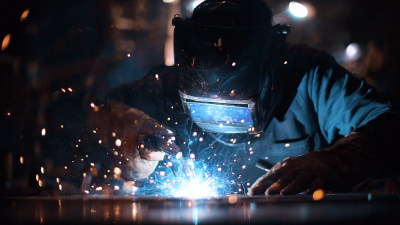
Wire welding is honestly one of those skills that can really open up a lot of doors across different industries — it’s like bringing a touch of art into the world of metalwork. I remember John Smith, this well-known welding expert at WeldTech, once said, “Getting the hang of wire welding techniques can unlock your creativity and give you that extra level of precision.” Starting out can be pretty intimidating, no doubt. It’s not just about knowing the equipment; you’ve got to get a feel for the materials and the techniques that make each weld strong and reliable.

A lot of beginners find themselves struggling with finding that sweet spot between heat and speed. Honestly, nailing that balance is key if you want your welds to look clean and hold up well. One common mistake? Overdoing or underdoing the wire feed — either it won’t penetrate right, or you end up with a lot of spatter. Watching experienced welders work can be super helpful — you pick up tips, tricks, and little nuances that are hard to learn from just instructions.

At the end of the day, wire welding takes patience and a lot of practice. It’s not just about ticking boxes; it’s about developing a real feel for how things should look and behave as you go. Every session is a new chance to learn something that can improve your technique. Trust me, with time and a bit of perseverance, what once felt hard can become a pretty cool craft. So, stick with it, and let each weld teach you something new — it’s all part of the journey.

How to Master Wire Welding Techniques for Beginners?

Understanding the Basics of Wire Welding Techniques

Wire welding is an essential skill for beginners looking to enter the world of metal fabrication. Understanding the basics is crucial. It starts with picking the right wire. Different projects require different types of wire. Solid wire works well for clean, flat surfaces. Flux-cored wire is better for outdoor work. Learning these distinctions can save you time and materials.

Setting up your welder correctly is a key step. This involves adjusting the voltage and wire feed speed. A common beginner mistake is having the settings too high. It creates excessive spatter, wasting wire and reducing quality. Practice makes perfect here. A test piece can help you fine-tune your settings before diving into a bigger project.

Another important aspect is mastering your posture and technique. Standing too far from the workpiece affects control. Try to maintain a comfortable distance. Keep a steady hand while moving the torch. Beginners often rush through their welds, leading to weak joints. Slowing down allows for better bead formation. Take breaks if needed to maintain focus. These simple practices can significantly improve your welding skills, making the process more enjoyable and productive.

Wire Welding Techniques Mastery Progress

This chart illustrates the proficiency levels of different wire welding techniques that beginners can master. Each bar represents a specific technique and its corresponding skill level, helping learners identify which techniques they may want to focus on improving.

Selecting the Right Wire and Equipment for Beginners

How to Master Wire Welding Techniques for Beginners?

Selecting the right wire and equipment is crucial for beginners in wire welding. The wire type impacts the quality of your welds. Solid wire, flux-cored wire, and some specialty wires each have unique applications. According to industry data, solid wires are popular for their ease of use and offer a smooth weld finish. However, they may not work well for outdoor settings. Beginners often struggle with this choice, leading to inconsistent results.

Having the appropriate welding machine is also essential. A machine’s amperage range determines the thickness of metal you can weld. Most novice welders should start with a machine that handles at least 90 amps. This ensures versatility across various projects. Reports suggest nearly 40% of new welders feel overwhelmed by equipment choices. Thus, researching your needs can save time and frustration.

Wire feed speed is another important aspect to consider. It directly affects the bead size and penetration. A speed that's too low can lead to a weak weld. If it’s too high, spatter increases and quality decreases. Many beginners overlook this, creating room for improvement. It's crucial to practice and refine these skills over time.

Essential Safety Precautions for Wire Welding Practices

Safety is critical in wire welding. Beginners must prioritize understanding proper techniques. Always wear a welding helmet. It protects your eyes and face from harmful rays and sparks. Long sleeves and gloves are essential too. They shield your skin from heat and metal spatter. It's easier to forget these details, but don’t. Neglecting them can lead to severe injuries.

Another safety precaution involves working in well-ventilated areas. Fumes from welding can be hazardous. Opening windows or using fans helps. Keeping a fire extinguisher nearby is wise. Accidents happen, and being prepared is key.

Remember to inspect your equipment regularly. Frayed wires or faulty machines can lead to shocks. Don't ignore strange sounds or smells. Reflect on your workspace too. Clutter can cause trips or spills. Maintaining organization helps prevent unnecessary risks. Always take a moment to assess your surroundings before starting. Safety is not just a practice; it’s a mindset.

Step-by-Step Guide to Setting Up Your Welding Workspace

Setting up your welding workspace is crucial for success. An organized area can boost productivity and safety. Begin by selecting a well-ventilated space. This will help prevent gas buildup during welding. Consider a sturdy workbench that can withstand heat and weight. Ensure adequate lighting throughout your space. Proper illumination helps you see what you are doing and reduces accidents.

Equipping your workspace with essential tools is vital. A good welding helmet protects your eyes and face. Gloves are equally important; they prevent burns and injuries. Keep a fire extinguisher nearby, just in case. It's wise to have a first aid kit on hand. Accidents can happen, even to beginners. The more prepared you are, the better.

Try to minimize clutter. Too many tools lying around can lead to mistakes. Rotate your tools regularly to keep things fresh. Reflect on your workflow as you go. If something feels off, rearrange your setup. A comfortable and functional environment makes all the difference in your welding journey. Working in a great space can spark creativity and confidence.

Key Welding Positions and Their Applications in Wire Welding

Wire welding is widely used in the manufacturing industry. Understanding key welding positions helps enhance efficiency. Beginners should focus on these positions: flat, horizontal, vertical, and overhead. According to industry reports, correct positioning can reduce defects by up to 30%. Each position serves a unique purpose.

In flat position, welders work horizontally. This is the easiest position for beginners. The overhead position presents challenges. It requires careful control to avoid molten metal drops. Mastering each position takes practice. It’s essential to develop muscle memory for consistent results.

Many welders struggle with the vertical weld. Gravity acts against them, making skill crucial. Reports indicate that less than 50% of beginners succeed on their first attempt in this position. Regular feedback and adjustment are vital. Experimenting with angle and speed can lead to improvement. Each attempt brings lessons that enhance proficiency.

How to Master Wire Welding Techniques for Beginners? - Key Welding Positions and Their Applications in Wire Welding

Welding Position Description Applications
Flat (1G) Welding is done with the filler metal below the joint. Used for welding plates and sheets in a horizontal position.
Horizontal (2G) Welding in a vertical plane with the joint horizontal. Often used for piping and angle iron structures.
Vertical (3G) Welding is conducted with the joint vertical. Used in structural steel work and in building frames.
Overhead (4G) Welding is performed with the joint overhead. Commonly used in construction and maintenance of piping systems.
Pipe (5G) Welding in a horizontal position around a pipe. Used for joining pipe sections in various applications.

Common Wire Welding Techniques and Their Advantages

Wire welding techniques offer a variety of methods suited for different tasks. Gas Metal Arc Welding (GMAW), commonly known as MIG welding, is versatile. It provides a smooth and fast process. Welders appreciate its simplicity, especially for beginners. The equipment is easy to set up. However, it requires practice to control the feed speed. Mastering this can take time.

TIG welding, or Gas Tungsten Arc Welding (GTAW), is another popular method. It allows for precise control. Welders can work on thin materials effectively. This technique often produces clean welds. Yet, it demands a steady hand and coordination. Beginners may struggle with the pedal control. It’s important to practice.

Flux-Cored Arc Welding (FCAW) is widely used for thicker materials. It provides a good penetration depth. The process is less affected by wind, making it suitable outdoors. However, the slag can be a pain to clean up. New welders might find this tedious at first. It’s a learning curve that requires patience. Each technique has its own pros and cons. Understanding them helps in choosing the right one.

Troubleshooting Tips for Beginners in Wire Welding Projects

Wire welding can be challenging for beginners. Many face common issues that can hinder their progress. Understanding these problems is crucial for improvement. For instance, improper settings often lead to poor welds. A survey by the American Welding Society found that 35% of new welders struggle with adjusting voltage and feed speed. This can cause undercutting or lack of fusion in joints.

Positioning is another vital aspect. Many novice welders find it hard to maintain a steady hand or proper angle. This often results in inconsistent bead appearance or excessive spatter. Additionally, the choice of wire can significantly affect the quality of work. Inadequate wire selection leads to weak welds. A study revealed that 25% of amateur welders do not choose the right filler material for their projects.

To remedy these issues, practice is essential. Engage in small projects before moving to complex tasks. Keep a record of settings and results. This helps identify what works and what doesn’t. Learning from mistakes guides improvement. Embrace the frustration; it’s part of the learning process. Each failed attempt contributes to mastery.

Optimizing Welding Performance with AWS A5.23: ECF3 Submerged Arc Welding Wire for Low-Alloy Steel Applications

In the realm of welding technology, the use of the AWS A5.23 standard has gained prominence for optimizing the performance of submerged arc welding (SAW) processes, particularly when working with low-alloy steel applications. The ECF3 submerged arc cored wire, conforming to this standard, offers remarkable benefits in terms of mechanical properties and arc stability. Reports indicate that low-alloy steel can achieve exceptional strength and durability when welded with wires specifically designed for SAW, enhancing productivity and reducing post-weld heat treatment requirements.

The ECF3 wire is engineered for compatibility with low-alloy steels, showcasing superior impact toughness and tensile strength, which are critical for demanding applications. Data from industry standards reveal that using optimized welding wires can result in improved bead appearance and reduced spatter, leading to a cleaner working environment and enhancing the overall efficiency of the welding process. With advancements in welding technology, such wires not only contribute to the structural integrity of the welded joints but also help in minimizing distortion, a common challenge when welding thicker sections of low-alloy steel.

Moreover, the ability to achieve high deposition rates with submerged arc welding using the ECF3 wire significantly reduces the welding cycle time and increases throughput in manufacturing scenarios. This is particularly beneficial in the construction and fabrication industries, where efficiency directly translates to cost-effectiveness. In summary, utilizing AWS A5.23: ECF3 submerged arc welding wire provides a viable solution for enhancing welding performance, ensuring high-quality welds, and meeting the growing demands in low-alloy steel applications.

FAQS

: What is the main purpose of the product?

: The product aims to simplify daily tasks and enhance efficiency. Users report improved time management through its features.

Is the product easy to use?

Many users find it user-friendly. However, some still face a learning curve. Practice is key to mastering it.

Can I customize the settings?

Yes, users can personalize various settings. Adjustments can significantly improve user experience and functionality.

What if I encounter a problem?

Users can contact support for help, but response times may vary. Documenting issues can speed up resolutions.

Are there any maintenance requirements?

Minimal maintenance is needed. Regular updates are crucial for optimal performance and security. Neglecting updates can lead to problems.

How does it compare to similar products?

It has distinct advantages, but not everyone may benefit equally. Assessing individual needs is important for making a decision.

Conclusion

Mastering wire welding techniques is essential for beginners looking to enhance their welding skills. This article emphasizes the importance of understanding the basics of wire welding, including selecting the appropriate wire and equipment tailored for novice welders. Incorporating essential safety precautions ensures a secure working environment while setting up your welding workspace correctly is crucial for effective practices.

The guide also covers key welding positions and their applications, which are vital for executing various projects. Readers will benefit from insights into common wire welding techniques, highlighting their advantages, and troubleshooting tips specifically designed for beginners. By following these guidelines, novices can confidently embark on their wire welding journey and tackle projects with improved proficiency.

Ethan

Ethan

Ethan is a dedicated marketing professional at Wenzhou Tianyu Electronics Co., Ltd., where he leverages his extensive knowledge of the company's diverse product range to deliver exceptional results. With a keen understanding of the electronics industry, Ethan plays a pivotal role in enhancing the......
Previous Evaluating the Advantages of Tungsten Welding vs. Alternative Welding Methods for Global Manufacturing